

Modern dentistry depends on more than capturing great images—it’s how efficiently those images turn into confident clinical decisions. As dental technology continues to advance, practices are shifting toward workflows that reduce fragmentation and improve consistency across diagnosis and treatment planning. A scan-to-plan workflow connects scanning, diagnostics, and planning in one connected system, helping practices move from data to decisions with greater clarity and control. In practice, this kind of workflow is enabled by platforms designed to unify imaging and diagnostics—such as the DEXIS digital ecosystem—so data flows naturally from scan to treatment plan.
This connected approach reflects a broader shift in digital dentistry: replacing disconnected tools and manual processes with integrated technologies designed to support accuracy, efficiency, and predictable outcomes.
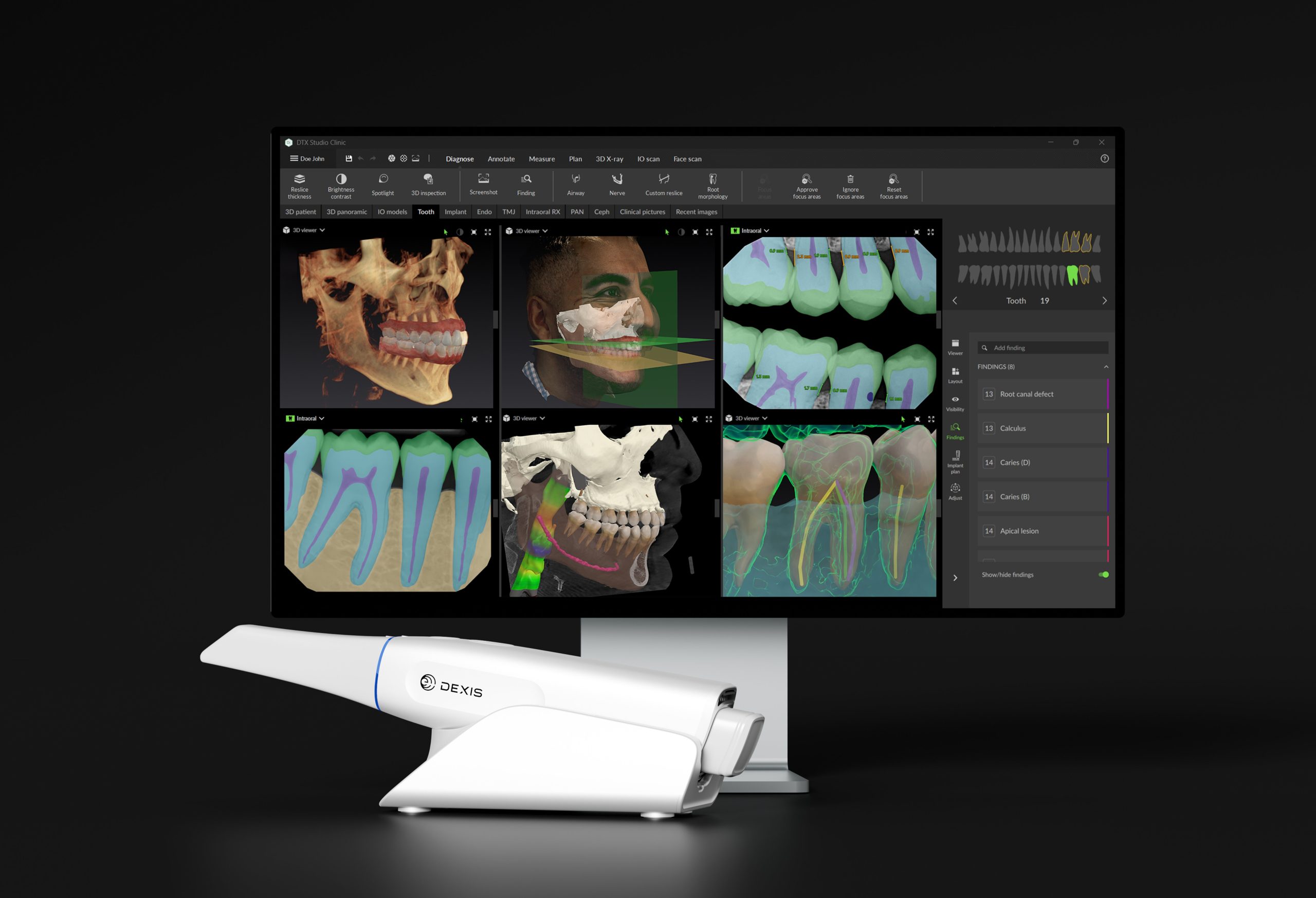
The Role of Intraoral Scanning in Modern Practice
The Role of Intraoral Scanning in Modern Practice
Clinicians gain immediate access to clean, accurate data, while patients benefit from a faster, more comfortable appointment without impression trays or materials. This shift is a foundational element of modern digital dentistry, supporting workflows that are more predictable and easier to repeat across cases.
When digital impression data is combined with AI powered analysis and integrated imaging tools, it results in a more streamlined and consistent clinical process, without the fragmentation associated with traditional, siloed workflows.
From Imaging to Insight, All in One View
From Imaging to Insight, All in One View
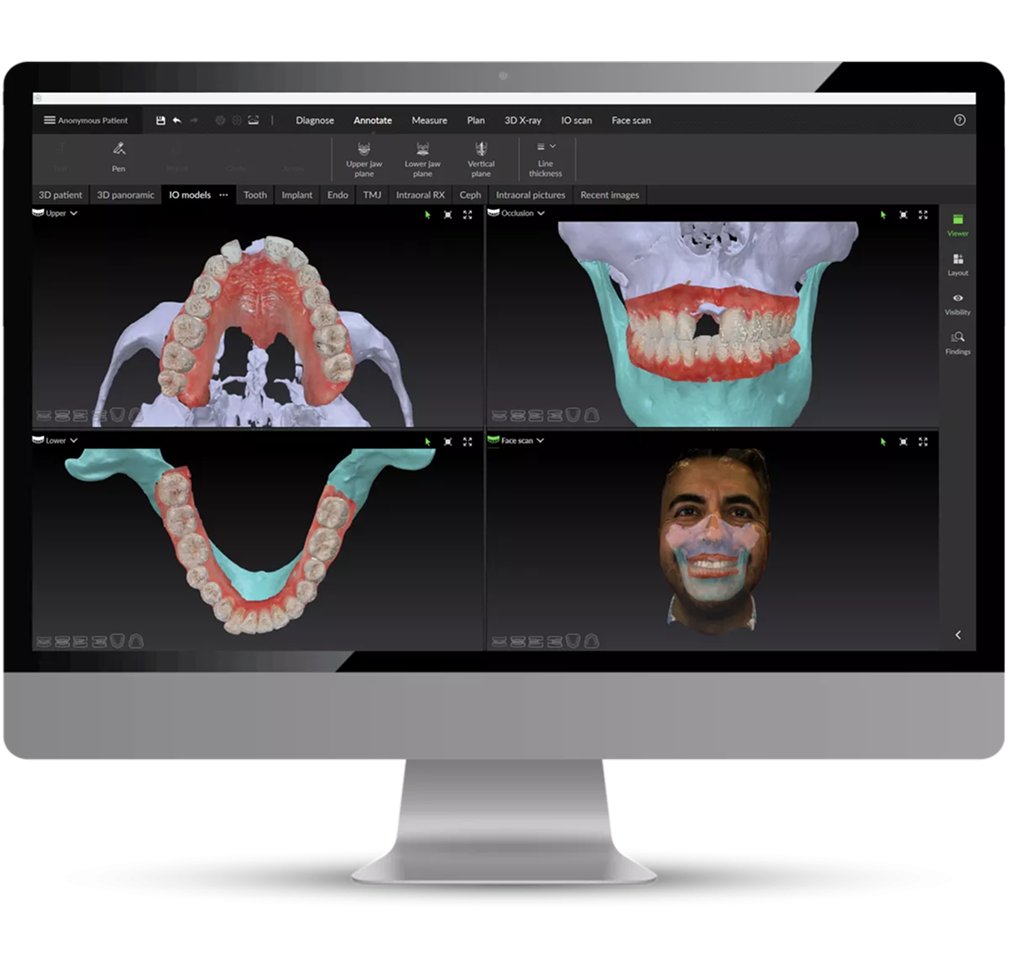
A connected scan-to-plan environment consolidates intraoral scans, 2D images, and 3D data into a single, comprehensive patient view. In platforms like DTX Studio™ Clinic, this unified view helps clinicians move seamlessly from diagnostics to treatment planning without switching systems or manually aligning data. Instead of switching between systems or manually aligning information, clinicians can evaluate findings, plan treatment, and communicate with confidence from one platform.
This unified view plays a critical role in visual diagnostics. Seeing all relevant imaging together allows clinicians to identify patterns, assess conditions more clearly, and align diagnostic insights with treatment goals. Whether reviewing restorative cases or implant planning, having all imaging in one place helps streamline clinical decision-making and reduce uncertainty.
AI‑Powered Tools That Reduce Complexity
AI‑Powered Tools That Reduce Complexity
AI‑powered tools play an important role in reducing complexity across the scan‑to‑plan workflow by minimizing manual steps and supporting more efficient case setup. Rather than requiring clinicians to manage multiple data sources or perform time‑consuming alignment tasks, AI helps organize and present information in a more intuitive way.
Within integrated imaging platforms like the DEXIS ecosystem, AI supports automated data organization and intelligent alignment, helping ensure scans and images are ready for evaluation without added effort. This consistency helps streamline workflows across cases while reducing the risk of errors or delays associated with manual processes.
By simplifying routine tasks, AI allows dental teams to focus less on managing data and more on interpreting insights and planning patient care. For busy practices, this efficiency helps keep schedules moving while maintaining a high standard of clinical quality.
Clearer Communication, Better Engagement
Clearer Communication, Better Engagement
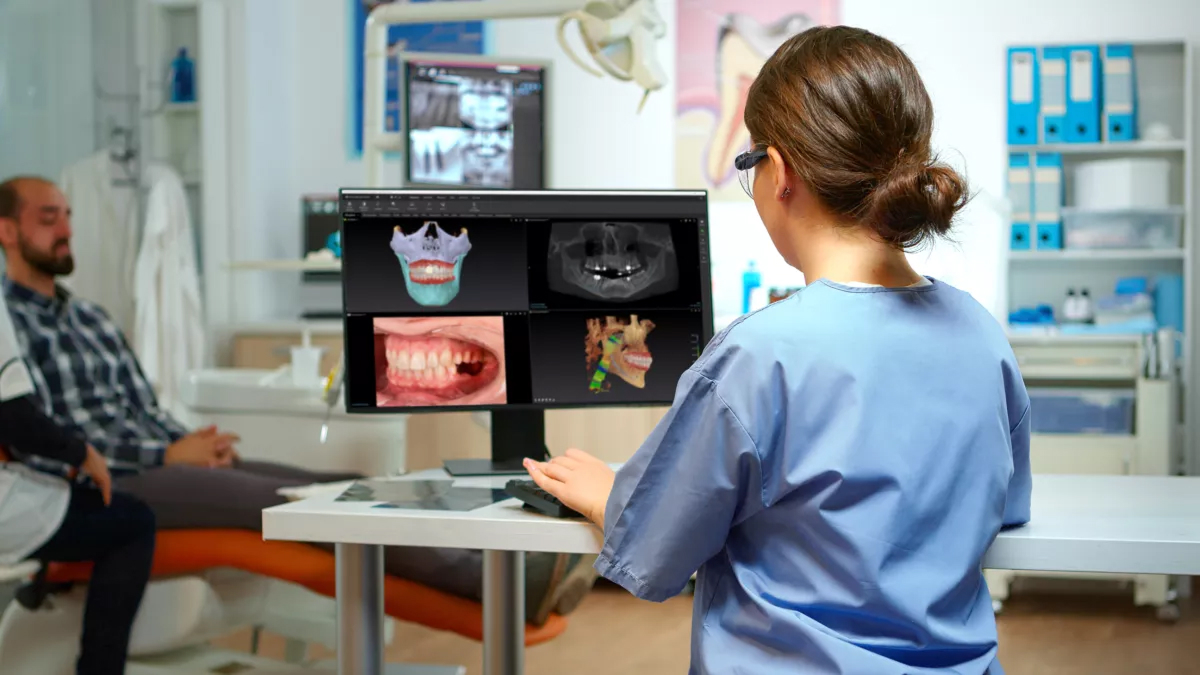
Visual clarity doesn’t just support clinicians. It improves patient understanding. Integrated imaging and visual diagnostic tools make it easier to explain conditions, findings, and treatment options in a way patients can easily follow.
By showing digital impressions, 2D images, and 3D views together, clinicians can explain what is happening – and why a treatment recommendation matters. This transparency helps patients feel informed and engaged in their care. It leads to better conversations and more confidence in treatment decisions.
Visual diagnostics play an important role in building trust. When patients can clearly see and understand their oral health, they become more active participants in their treatment journey.
“Visual diagnostics play an important role in building trust. When patients can clearly see and understand their oral health, they become more active participants in their treatment journey.”
Efficiency That Supports the Entire Clinical Team
Efficiency That Supports the Entire Clinical Team
A digital workflow is designed to support more than one role—it’s built for the entire clinical team. By simplifying case setup, planning, and data management, teams can collaborate more effectively and maintain consistency across providers and locations.
Routine tasks become more efficient, information is easier to access, and workflows are easier to standardize. This level of consistency is especially important for practices adopting digital dentistry at scale, where predictability and repeatability matter just as much as innovation.
The result is a workflow designed not just for technology’s sake, but for real clinical efficiency—supporting accuracy, collaboration, and better outcomes at every stage of care.
A Smarter Path Forward
A Smarter Path Forward
A digital dentistry workflow is not about adding complexity, it’s about removing friction. By eliminating traditional impressions, integrating advanced dental technology, and unifying imaging and diagnostics in one connected experience, practices can deliver care with greater clarity and confidence.
As digital dentistry continues to evolve, workflows that connect scanning, diagnostics, and planning will play an increasingly important role in helping practices work more efficiently while elevating patient care.
For practices looking to streamline workflows, enhance visual diagnostics, and improve clinical consistency, a connected scan-to-plan approach offers a practical path forward.
Explore the DEXIS digital workflow powered by the powerful pair – DEXIS™ Imprevo and DTX Studio™ Clinic technologies.